
Why Portuguese Wine Is So Good
Quality, Value and Vineyard Strategy That Sets It Apart
Portuguese wine is increasingly recognised as one of the most undervalued yet excellent wine categories in the world — and there are clear economic and viticultural reasons why. Below we explain two major factors that help Portuguese wine deliver exceptional quality at accessible prices.
Lower Production Cost Means Better Value in the Bottle
Portugal’s wine producers benefit from a lower cost base than many of their European counterparts.
Real Salary Differences
While average earnings vary across Europe, Portugal’s average annual salary is significantly below the EU median, which directly affects labour and production costs in viticulture and winemaking:
- In 2024, the average annual wage in Portugal was around €24,818, compared with an EU average near €39,800 — making Portugal’s wages considerably lower than wealthier EU countries.
Lower wages don’t mean lower quality — they mean lower overheads for producers. Wine production is labour-intensive: tending vineyards, harvesting by hand where quality matters, and detailed cellar work all require time and expertise. When labour costs are lower, producers can invest more of the budget in grapes and cellar care rather than overheads.
What This Means for You
At the same price point where German or other higher-cost producers must pass on elevated labour and land costs, Portuguese producers can invest more into grape quality and winemaking precision, yielding better quality per euro spent.
Vineyard Land Use & Efficiency — Quality Before Quantity
Another structural advantage for Portuguese wine lies in how vineyards are used and managed.
Portugal’s Share of EU Vineyard Land
According to Eurostat data on vineyard areas in the EU:
- Portugal accounts for approximately 9% of the total vineyard surface area in the EU, placing it among the leading vine countries, but still well behind the largest producers like Spain, France and Italy.
Germany and other producers also have vineyard areas, but their usage patterns, climate and structure differ significantly:
- Germany, for example, produces wine predominantly in structured wine regions along rivers like the Rhine, but with much smaller viticultural areas overall compared to southern producers, yet often at higher cost per hectare, reflecting land values and labour costs.
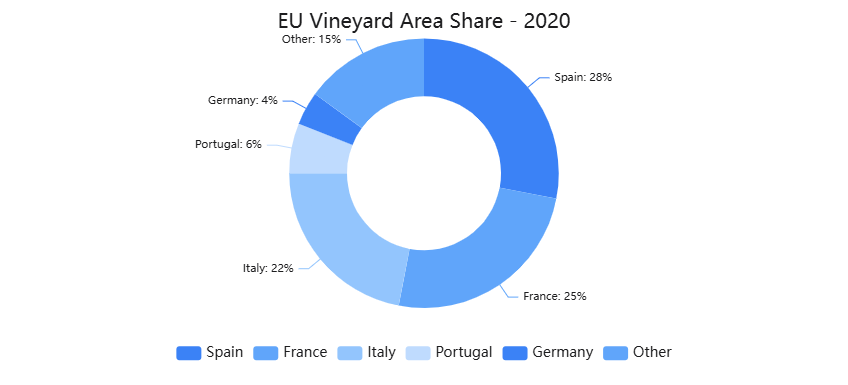
Source: Vineyards in the EU – statistics – https://ec.europa.eu/eurostat/statistics-explained/index.php?title=Vineyards_in_the_EU_-_statistics

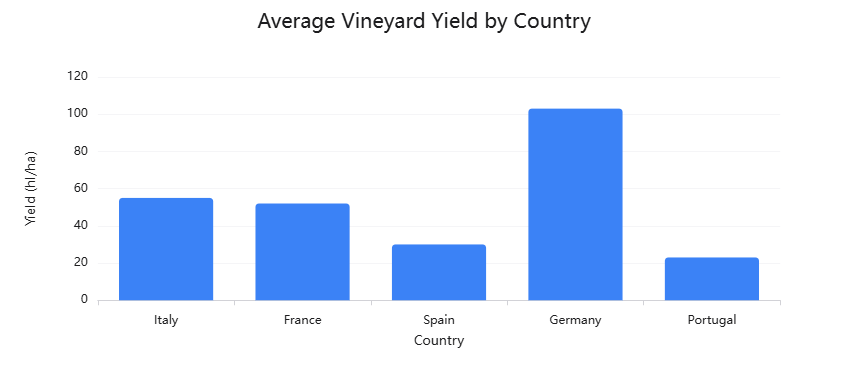
Source: https://en.wikipedia.org/wiki/Yield_%28wine%29

Source: https://tradingeconomics.com/portugal/grape-production-for-wines-eurostat-data.html
Focused, Efficient Grapes = Better Quality
While total vineyard area alone doesn’t determine quality, the way land is used matters:
- Portugal’s vineyards are often held by small, family-run estates with deep local knowledge of micro-climates, soils and grape varieties. This focus on terroir rather than mass-production helps produce grapes with better flavour concentration and consistency.
- In many Northern European contexts, producers must balance shorter growing seasons or cooler climates with larger infrastructure costs, which can push yields in directions that favour volume over expressive quality.
Viticulture Insight:
Portugal’s focus on quality-driven vineyard management — even with declining overall production volumes in some years — leads to grapes that form the foundation of better wine.
What This Means for Quality
Because Portugal’s vineyard structure prioritises variety, terroir expression and optimised yields, the grapes available for winemaking tend to deliver more character and complexity per hectare. This is a key reason why many Portuguese wines — especially from regions like Douro, Alentejo and Vinho Verde — offer distinctive profiles at prices that don’t feel inflated.
Source: https://ec.europa.eu/eurostat/statistics-explained/index.php?title=Vineyards_in_the_EU_-_statistics
Bringing It Together — Better Cost & Better Vineyard Practice
When you combine:
✔️ Lower production costs (thanks to wage and economic structure)
✔️ Viticultural focus on quality and site-specific grapes rather than purely large-scale volume
—you get Portuguese wines that have the potential to be 2–3× better quality at the same price point when compared with similarly priced bottles from higher-cost countries.
This is not just anecdotal — it’s rooted in economic realities and how vineyards are managed across Europe.
Portugal’s wine industry may not be the largest in volume, but its approach to land, labour and tradition creates a value proposition that few regions can match — delivering authentic, expressive wines at prices that feel fair and rewarding.